
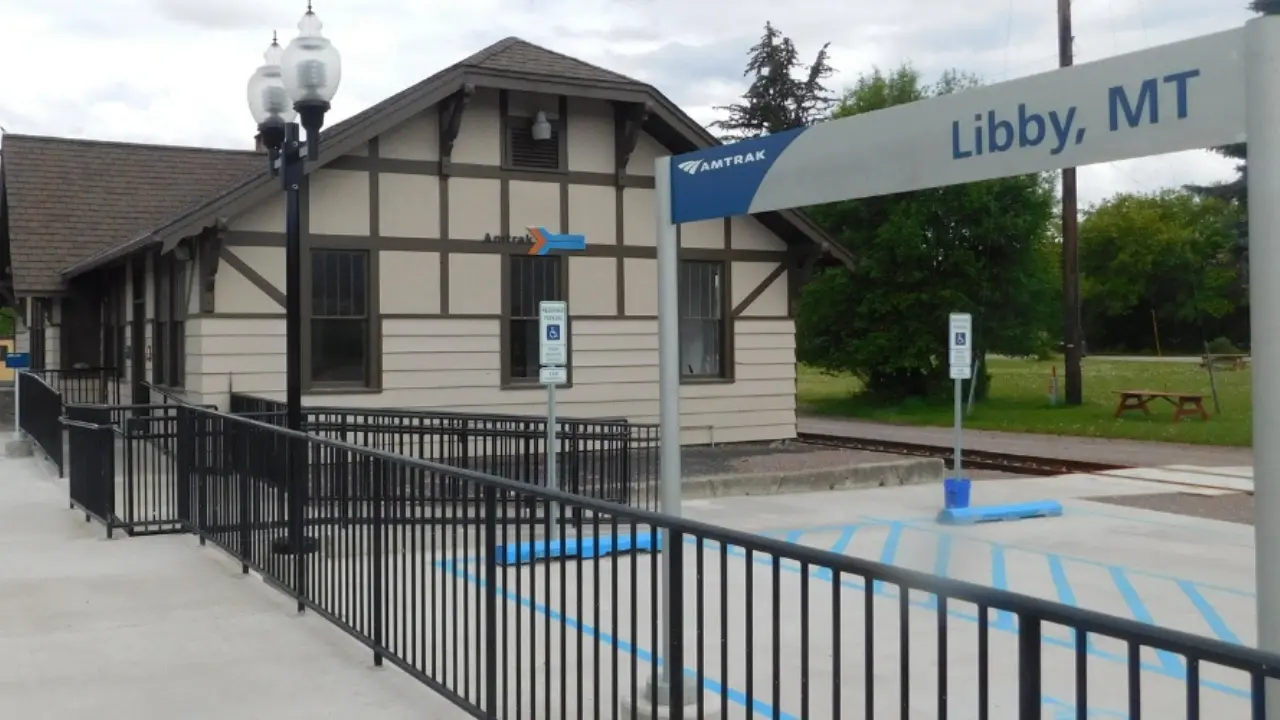
The Amtrak stop in Libby, Montana serves as a small but important rail access point for travelers crossing the northern United States. Located in a quiet mountain town surrounded by the Kootenai National Forest region, it provides a direct link to long-distance rail travel on one of Amtrak’s most scenic routes. The Libby Amtrak Station is not a large urban terminal but a rural stop designed for practical boarding and disembarking rather than extended passenger services.
Overview of Libby Amtrak Station
The Libby Amtrak Station operates as a flag stop on Amtrak’s Empire Builder line, meaning trains only stop when passengers have tickets to board or disembark at Libby. This system is common in rural areas where daily passenger volume is low but consistent enough to justify scheduled service.
Unlike major transportation hubs, the station is minimal in structure. It primarily consists of a sheltered waiting area and a designated boarding platform. There is no full-time staff presence, and passengers are expected to handle ticketing and travel arrangements online or through Amtrak’s mobile services.
This type of setup is designed to balance operational efficiency with accessibility, ensuring that even small communities remain connected to the national rail network.
Libby Amtrak Station Contact Details
Location and Accessibility
The station is located at:
100 Mineral Ave, Libby, MT 59923, United States.
The LIB Amtrak Station sits near the central part of town, making it relatively easy to reach from most local accommodations and residential areas. Libby itself is a small town, so transportation to the station typically involves walking, private vehicles, or local taxi services.
Accessibility highlights include:
- Street-level access with minimal elevation changes
- Nearby parking areas for short- and long-term use
- Easy navigation due to the town’s simple grid layout
- Direct roadside visibility, making it easy for first-time visitors to locate
However, public transportation options are extremely limited, so travelers generally plan their arrival in advance. Weather conditions in winter can also affect accessibility, as the region experiences snow and icy roads.
| Station: | Libby Station |
| Station Code: | LIB |
| Contact Number: | 1-800-872-7245 |
| Email: | etickets@amtrak.com |
| Lost and Found: | Online Form |
| Police: | +1-800-331-0008 |
| Working Hours: | Monday to Sunday from 09:30 AM to 06:30 PM |
| Nearby Airport: | Glacier Park International Airport (FCA) in Kalispell |
| Website: | https://www.amtrak.com/home |
| YouTube: | https://www.youtube.com/amtrak |
| Facebook: | https://www.facebook.com/Amtrak/ |
| Instagram: | https://www.instagram.com/amtrak |
| X (Twitter): | https://www.twitter.com/amtrak |
| LinkedIn: | https://www.linkedin.com/company/amtrak |
| Pinterest: | https://www.pinterest.com/amtraktravels/ |
LIB Amtrak Station Layout Map
Further, this is a detail-oriented visual representation of Amtrak’s Libby Station. With the help of this map, passengers can have a hassle-free navigation experience. The entry and exit points of Amtrak can also be figured out conveniently.
Routes and Train Services
The Libby Amtrak Station is served exclusively by the Empire Builder, one of Amtrak’s most well-known long-distance routes. This train runs between Chicago and the Pacific Northwest, splitting at Spokane, Washington, to serve both Seattle and Portland.
Key route characteristics include:
- Eastbound service toward Chicago, passing through Montana, North Dakota, Minnesota, and Wisconsin
- Westbound service toward Spokane, with onward connections to Seattle or Portland
- Limited daily frequency (typically one train in each direction per day)
- Seasonal delays possible due to weather conditions in mountainous regions
Because of its long-distance nature, the service is not designed for short regional trips. Instead, it connects rural communities like Libby to major national travel corridors.
Facilities and Amenities at LIB Amtrak Station
Facilities at the Libby Amtrak Station are intentionally basic, reflecting its role as a low-traffic rural stop. Passengers should not expect the same amenities found in larger stations.
Available features include:
- Open-air or partially sheltered waiting area
- Basic seating for passengers
- Signage for train arrivals and boarding instructions
- Nearby street parking
Not available at the station:
- Ticket counters or staffed assistance
- Restrooms or food services
- Baggage handling services
- Indoor climate-controlled waiting rooms
Travelers are encouraged to arrive prepared, especially during winter months, as waiting times can vary depending on train schedules and delays.
Passenger Experience and Operational Structure
The experience at the LIB Amtrak Station is shaped by its rural and operational constraints. Because it functions as a flag stop, trains only halt when needed, which reduces unnecessary fuel use and improves efficiency on long routes.
Passengers typically experience:
- Quiet boarding environment with minimal crowds
- Advance coordination required for arrival and departure timing
- Limited on-site assistance, requiring self-sufficiency
- Scenic surroundings, especially during daylight travel through Montana’s forested terrain
The operational structure exists primarily due to demand levels. Running a fully staffed station in a small town would not be cost-effective given the limited number of passengers. Instead, Amtrak uses a streamlined model that maintains service coverage while controlling operational costs.
This setup also reflects the geography of the region. Northwestern Montana has dispersed populations, and rail stops like this ensure connectivity without requiring large infrastructure investments.
Why Services Are Limited in Libby
The limited services at the LIB Amtrak Station are not accidental but a result of practical transportation planning. Several factors influence this structure:
- Population density: Libby has a small population, resulting in low daily ridership.
- Demand patterns: Most travel is long-distance rather than local commuting.
- Cost efficiency: Staffing and maintaining a full station would not be economically sustainable.
- Route design: The Empire Builder is built for cross-country travel, not regional stops.
This model allows Amtrak to maintain national coverage while focusing resources on high-traffic stations.
Regional Importance and Connectivity
Despite its size, the LIB Amtrak Station plays an important role in regional mobility. It provides residents with access to national rail infrastructure, which is especially valuable in areas with limited air or bus connectivity.
The station supports:
- Travel for tourism into and out of Montana’s outdoor recreation areas
- Access for residents traveling to larger metropolitan centers
- Connectivity for students, workers, and long-distance travelers
Libby’s location near forests, rivers, and mountain terrain also makes rail access an appealing alternative to driving long distances on mountainous highways.
Travel Tips for Using LIB Amtrak Station
Travelers using the LIB Amtrak Station should plan carefully due to its limited infrastructure and rural environment.
Helpful tips include:
- Arrive at least 30–45 minutes before the scheduled train time
- Monitor Amtrak updates for delays, especially in winter
- Bring water, snacks, and weather-appropriate clothing
- Confirm ticket details in advance since no station staff is available
- Use GPS navigation, as signage in rural areas may be limited
Because the station is unstaffed, preparation is the key factor in ensuring a smooth travel experience.
Future Outlook
While there are no confirmed major expansion plans, the LIB Amtrak Station is expected to continue operating in its current form. Rural stops like this are likely to remain part of Amtrak’s long-distance network as they provide essential connectivity across vast geographic regions.
FAQs
No, it is an unstaffed flag stop with no ticket office or on-site personnel.
It is served by the Empire Builder, running between Chicago and the Pacific Northwest.
No, tickets must be purchased online, via the Amtrak app, or by phone before arrival.
There is a basic shelter, but no restrooms or indoor waiting facilities are available.
Arriving 30–45 minutes early is recommended to ensure smooth boarding and account for delays.