
The National Rail route planner is an online tool that makes it easy to find train routes between two stations, check journey duration, and track the live train schedules. It also helps to compare ticket prices and provides real-time updates on delays, cancellations, and platform information. This tool makes it easy to plan the journey across Great Britain, including England, Scotland, and Wales. It is available on the official National Rail website and is easy to use.
How to Use the National Rail Route Planner?
Using the National Rail route planner is easy and helps to find train times, routes, and ticket prices quickly. Here are a few simple steps to use the tool:
Step 1: Start with journey planning by:
- Choosing the departure station and destination station.
- Customize the route by clicking on go via or avoid certain stations.
- Select single or return journey options.
- Modify the travel date and time.
- Next, choose the number of passengers and apply Railcards for discounts.
- Use Journey Options for more control.
- Tap on Get times and prices.
- A list of available train options will appear on the screen.
Step 2: View and compare results
- Five options will appear on the results page.
- Ticket price, departure and arrival times, journey duration, direct or connecting trains, and delay or cancellation information will appear for each option.
- Choose the train for a suitable schedule.
- Tap on the select option.
Step 3: Before booking, review and buy tickets
- Compare Standard vs First Class
- View different ticket types and prices
- Check full journey details
- Click on Buy tickets
- It will redirect the passenger to a train company website to complete payment.
National Rail Map
The map for National Rail or the National Rail route diagram shows how major cities are connected. It also helps to find long-distance and regional connections.
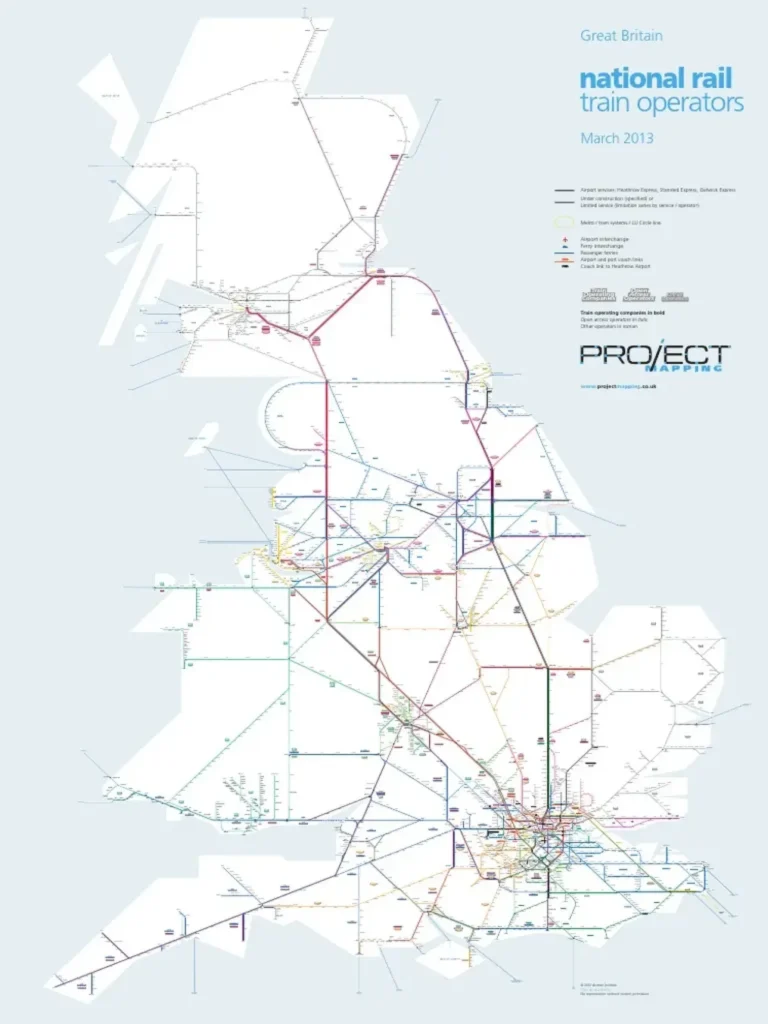
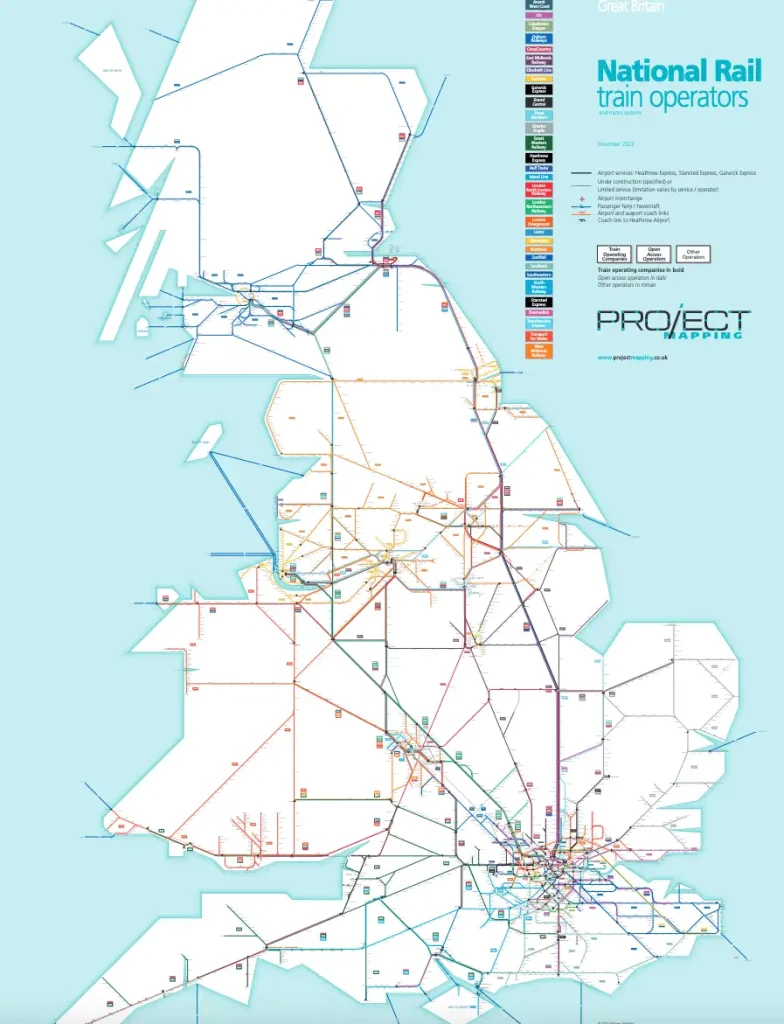
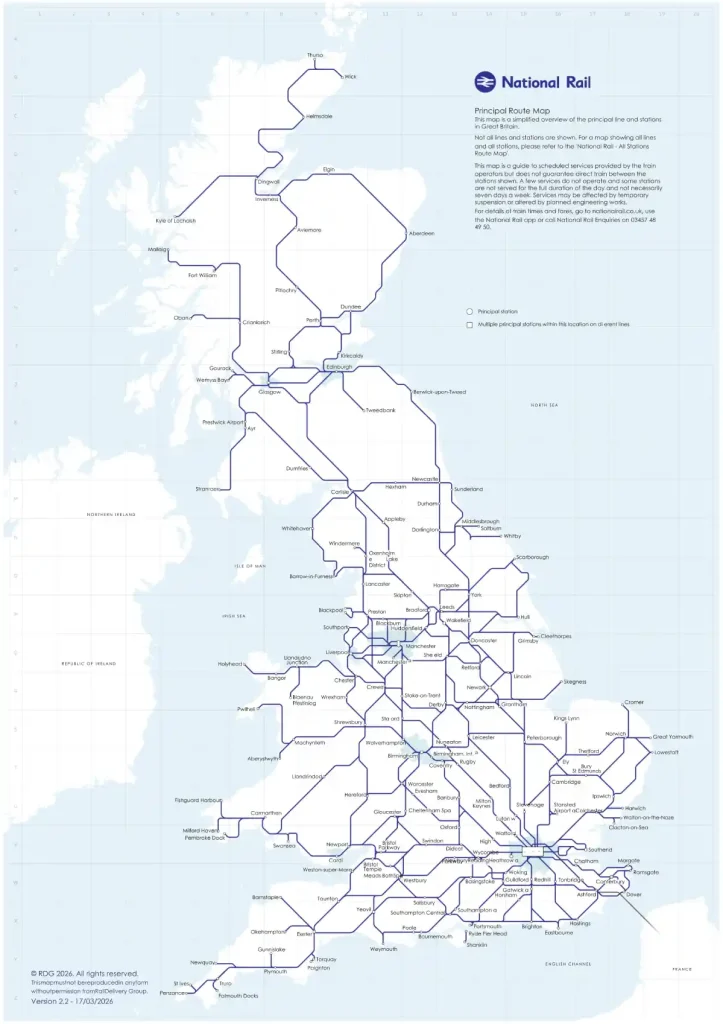
National Rail Routes
National Rail routes are the primary passenger train services that operate across Great Britain, connecting over 2,500 stations. The tracks and infrastructure are managed by Network Rail, while different train companies operate the services. It connects major cities and towns across Great Britain, including England, Scotland, and Wales, in cities like London, Manchester, Leeds, Birmingham, Glasgow, Edinburgh, Cardiff, and Bristol. It also serves busy hubs such as York and Brighton, covering more than 2,500 stations in total.
Types of National Rail Routes
The routes are divided into different types depending on service, such as inter-city main lines, regional express, commuter networks, and scenic routes.
Inter-city Main Lines: These National Rail train routes are high-speed and long-distance train routes with fewer stops that connect major cities like London, Edinburgh, Manchester, and Glasgow.
Regional Express: These routes connect smaller cities and towns. The trains stop more frequently and cover shorter distances. The popular routes are Manchester to Leeds and Birmingham to Nottingham.
Commuter Routes: These routes are ideal for daily travel within the cities. The routes include the London/South East network, West Midlands Railway, Merseyrail, and ScotRail.
Scenic Routes: Some famous scenic National Rail routes include the Cambrian Coastline in Wales and the West Highland Line in Scotland, known for their beautiful views.
Major National Rail Routes
The main National Rail routes in Great Britain are built around three major north-south lines and one west-east route called the Great Western line. Trains are run by companies such as Avanti West Coast, LNER, Eurostar, and Great Western Railway, and they can travel at speeds of up to 125 mph.
East Coast Main Line (ECML): This route connects London to Scotland through New York and Newcastle. It is mainly operated by LNER.
West Coast Main Line (WCML): Operated by Avanti West Coast, this busiest National Rail route connects London to Glasgow via cities like Birmingham and Manchester.
Great Western Main Line (GWML): This route connects London Paddington to cities like Bristol and Cardiff through Great Western Railway.
Midland Mainline: This route runs from Eurostar London St Pancras Station to cities like Sheffield and Nottingham, passing through the East Midlands region.
CrossCountry Routes: These routes are operated by CrossCountry to connect different regions without passing through London, making travel easier between cities like Birmingham, Manchester, and Bristol.
National Rail Routeing Guide
It involves a set of rules that explains:
- Which routes are valid for a ticket
- How to travel between two stations
- What comes under a permitted route
Any Permitted Route National Rail
Any route permitted by National Rail allows travel between any stations mentioned on the National Rail routeing guide, a direct train, or the shortest route. Passengers need not travel in a way that goes backwards (no backtracking). These tickets can be used on different train companies, but travel times may be limited depending on the ticket type, such as Off-Peak or Anytime.
Tips for Travelling on National Rail Routes
Below are some simple tips to travel on National Rail routes:
- Book the tickets early to scure best deals.
- Check routes using the route planner or finder.
- Confirm routes using the routeing guide.
- Use railcards to get the discounts.
- Try to reserve seats on long journeys.
National rail routes are the main part of transport across Great Britain, connecting big cities, small towns, and countryside areas through a well-connected network. These routes can be easily planned with the help of online tools like national rail route planner, national rail routes map, and routeing guide.
Frequently Asked Questions
This tool helps find train routes, timings, and connections across Great Britain.
It allows travel on multiple valid routes between two stations with a single ticket.
The national rail network map is available on the official National Rail website.
Yes, if you have any permitted route tickets, then you do not need to purchase a new ticket.
Yes, the planner shows permitted routes.
It covers over 2,500 stations across Great Britain.
No, only tickets labeled as any permitted route are allowed on the National Rail route.