
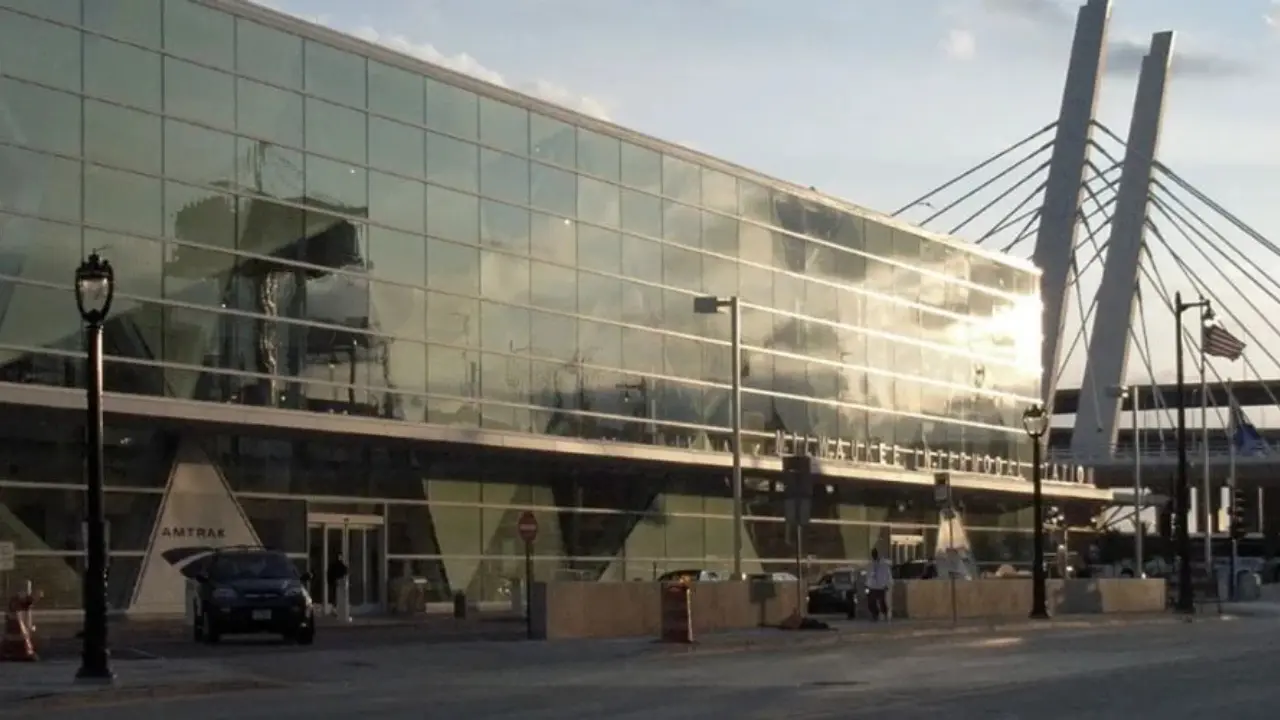
The Milwaukee Amtrak Station serves as the primary intercity rail hub for Milwaukee, Wisconsin, and is formally known as the Milwaukee Intermodal Station. It plays a key role in connecting southeastern Wisconsin with regional and national rail networks. Travelers passing through this station typically experience a mix of commuter-oriented and long-distance rail services, making it one of the most important transportation points in the region.
For many passengers, the MKE Amtrak Station is not just a boarding point but also a multimodal transit hub where Amtrak trains, intercity buses, and local transportation systems intersect. This integration is designed to simplify transfers and improve connectivity across different travel modes.
Location and Accessibility of Milwaukee Amtrak Station
The station is located at 433 W St Paul Ave, Milwaukee, WI 53203, near downtown Milwaukee. Its central location allows easy access to hotels, business districts, and cultural attractions within walking distance or a short ride away.
Accessibility options include:
- Public transit: Milwaukee County Transit System (MCTS) buses stop near the station, connecting it to neighborhoods across the city.
- Road access: The station is directly accessible from major downtown streets and nearby highways.
- Ride services and taxis: Dedicated pick-up and drop-off zones make it convenient for travelers using ride-hailing services.
- Walking access: Downtown hotels and offices are within a short walking distance.
The design of the MKE Amtrak Station prioritizes ease of transfer, which is why it is structured as a shared intermodal facility rather than a rail-only terminal.
| Station: | Milwaukee Station |
| Station Code: | MKE |
| Contact Number: | 1-800-872-7245 |
| Email: | etickets@amtrak.com |
| Lost and Found: | Online Form |
| Police: | +1-800-331-0008 |
| Working Hours: | Monday to Sunday from 09:30 AM to 06:30 PM |
| Nearby Airport: | Milwaukee Mitchell International Airport (MKE) |
| Website: | https://www.amtrak.com/home |
| YouTube: | https://www.youtube.com/amtrak |
| Facebook: | https://www.facebook.com/Amtrak/ |
| Instagram: | https://www.instagram.com/amtrak |
| X (Twitter): | https://www.twitter.com/amtrak |
| LinkedIn: | https://www.linkedin.com/company/amtrak |
| Pinterest: | https://www.pinterest.com/amtraktravels/ |
MKE Amtrak Station Layout Map
Further, this is a detail-oriented visual representation of Amtrak’s Milwaukee Station. With the help of this map, passengers can have a hassle-free navigation experience. The entry and exit points of Amtrak can also be figured out conveniently.
Routes and Train Services at MKE Amtrak Station
The Milwaukee Amtrak Station is primarily served by two major Amtrak services. The most frequent is the Hiawatha Service, which runs multiple times daily between Milwaukee and Chicago. This corridor is one of the busiest short-distance rail routes in the Midwest due to high commuter demand.
The second major service is the Empire Builder, a long-distance route that connects Chicago to the Pacific Northwest, passing through Milwaukee on its way to cities such as Minneapolis, Spokane, and Seattle.
Key service characteristics include:
- High-frequency commuter rail to Chicago Union Station
- Long-distance cross-country connectivity via the Empire Builder
- Predictable schedules designed around commuter peak hours
- Seasonal and operational adjustments based on demand and rail traffic
The MKE Amtrak Station functions as a strategic stop rather than a major origin hub for multiple national routes. This is largely due to track-sharing agreements and freight rail congestion in the region, which limits expansion of additional passenger services.
Facilities and Amenities at Milwaukee Amtrak Station
Inside the station, travelers will find a range of amenities designed for comfort during short and long waits. The Milwaukee Amtrak Station operates as a modern intermodal facility, so its services are shared between rail and bus passengers.
Available facilities include:
- Spacious indoor waiting areas with seating
- Ticketing counters and self-service kiosks
- Restrooms maintained for public use
- Food and beverage options nearby or within the terminal
- Baggage assistance and checked baggage services on select routes
- Accessibility features including elevators, ramps, and ADA-compliant restrooms
- Parking facilities for short-term and long-term use
Because it is an intermodal station, design priorities focus on passenger flow efficiency rather than luxury amenities. This explains why the Milwaukee Amtrak Station offers functional rather than extensive commercial services.
Passenger Experience and Station Operations
Travelers using the Milwaukee Amtrak Station generally experience a straightforward and structured boarding process. Security procedures are minimal compared to airports, but passengers are expected to arrive early for baggage handling and boarding announcements.
Operations at the station are influenced by shared rail infrastructure. Freight trains frequently use the same tracks as passenger services, which requires careful scheduling coordination. As a result, occasional delays can occur, especially during peak freight movement periods.
Inside the station, passenger movement is typically smooth due to clear signage and organized platform access. Staff presence is moderate, focusing on ticketing support and boarding assistance rather than constant supervision.
Historical Background and Regional Importance
The current Milwaukee Intermodal Station replaced older rail terminals in the city as part of a broader effort to modernize transportation infrastructure. Milwaukee has long been a significant rail junction due to its industrial history and location between Chicago and northern Wisconsin.
Historically, rail travel in Milwaukee was more extensive, with multiple rail companies operating competing passenger services. Over time, consolidation of rail networks and the rise of automobile and air travel reduced the number of passenger rail routes. The modern Milwaukee Amtrak Station reflects this shift by focusing on essential and high-demand services rather than a large network of routes.
Despite these changes, the station remains a critical connector between Wisconsin and the broader Midwest rail system.
Travel Tips for Using Milwaukee Amtrak Station
Travelers can improve their experience at the MKE Amtrak Station by planning ahead and understanding peak travel conditions.
Helpful tips include:
- Arrive at least 30–45 minutes before departure for smoother boarding
- Check real-time train updates, especially during winter weather
- Use mobile ticketing to avoid queues at kiosks
- Plan connections carefully if transferring between bus and rail services
- Consider weekday off-peak travel for fewer crowds on the Chicago corridor
Future Outlook of Rail Services
Future development at the station is closely tied to regional rail expansion plans in the Midwest. There has been ongoing discussion about increasing frequency on the Chicago–Milwaukee corridor and improving high-speed rail compatibility along existing tracks.
Infrastructure improvements, such as upgraded signaling systems and track enhancements, could reduce delays and support higher service frequency. While major expansion of long-distance routes is limited by national network constraints, regional commuter rail is expected to remain the focus.
The Milwaukee Amtrak Station is likely to continue evolving as demand for sustainable and efficient transportation grows, especially for short intercity travel.
FAQs
The station is mainly served by the Hiawatha Service and the Empire Builder long-distance route. These provide regional and cross-country connectivity.
It is located at 433 W St Paul Ave, Milwaukee, WI 53203, in downtown Milwaukee with easy access to transit and hotels.
Arriving 30–45 minutes early is recommended to allow time for boarding and ticket checks, especially during busy travel periods.
Train services are shaped by shared freight rail infrastructure and high-demand corridor planning between Milwaukee and Chicago.
Yes, the station is designed for clear passenger flow, with signage and staff assistance to guide travelers efficiently.
2 thoughts on “Amtrak Train Station Milwaukee, WI (MKE)”
We are going from the Intermodel Amtrak station to the country Inn and suites, Radisson Milwaukee West (Brookfield), 1250 S. Moreland Rd., Brookfield West Milwaukee. Where is the closest car rental to the Intermodel station torent a car?
Or what’s the best way to get to the country Inn and suites
Thank you for your question! If you’re arriving at the Milwaukee Intermodal Station, you’ll find several car rental companies within a few minutes of the station, including Enterprise, Hertz, Avis, and Budget. Most require a short taxi or rideshare ride because there isn’t a rental counter inside the station.
However, if you’re only heading to the Country Inn & Suites by Radisson Milwaukee West in Brookfield, a rideshare is usually the more practical choice. The hotel is about a 15–20 minute drive from the station, so using Uber or Lyft is often faster than picking up a rental car. On the other hand, if you plan to visit attractions around Milwaukee or travel beyond Brookfield during your stay, renting a car gives you more flexibility.