
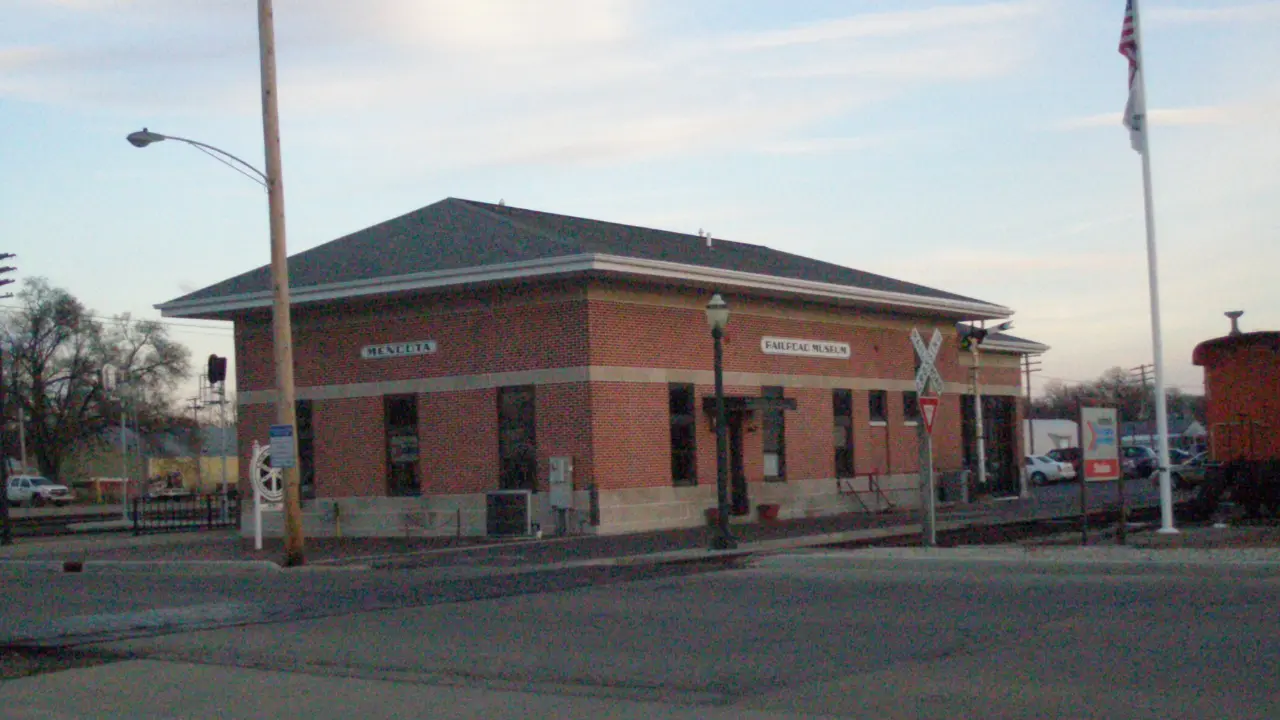
The Mendota rail stop is a small but important part of Illinois’ regional passenger rail network, serving travelers moving between Chicago and central-western Illinois. Mendota Amtrak Station functions primarily as a stop on long-established BNSF Railway tracks rather than a full-service terminal, which shapes everything from its layout to passenger services.
Unlike larger urban stations, this stop is designed for quick boarding and disembarking. Trains pass through at scheduled times, and passengers are expected to be ready well in advance since there is no staffed ticket counter or waiting hall with services. This operational simplicity is intentional, reflecting both the size of Mendota and the role of the route as a regional connector rather than a high-volume commuter hub.
Location and Accessibility of Mendota Amtrak Station
The station is located at 783 Main St, Mendota, IL 61342, United States, positioned close to the city’s central corridor. Its placement makes it relatively easy to reach from most parts of town, especially by car or local taxi services.
Reaching the station is straightforward due to Mendota’s compact urban layout:
- By car: Main Street connects directly with local roads and nearby highways, making it the most convenient option for most passengers.
- Walking: Residents living in downtown Mendota can reach the platform within a short walk.
- Parking: A small public parking area is available nearby, though it is not a secured or gated facility.
- Accessibility: The platform is ground-level, which generally supports step-free boarding, though amenities for passengers with disabilities are minimal compared to larger stations.
For first-time visitors, signage is modest, so it is helpful to confirm directions in advance rather than relying on extensive station guidance on-site.
| Station: | Mendota Station |
| Station Code: | MDT |
| Contact Number: | 1-800-872-7245 |
| Email: | etickets@amtrak.com |
| Lost and Found: | Online Form |
| Police: | +1-800-331-0008 |
| Working Hours: | Monday to Sunday from 09:30 AM to 06:30 PM |
| Nearby Airport: | Chicago Rockford International Airport (RFD) |
| Website: | https://www.amtrak.com/home |
| YouTube: | https://www.youtube.com/amtrak |
| Facebook: | https://www.facebook.com/Amtrak/ |
| Instagram: | https://www.instagram.com/amtrak |
| X (Twitter): | https://www.twitter.com/amtrak |
| LinkedIn: | https://www.linkedin.com/company/amtrak |
| Pinterest: | https://www.pinterest.com/amtraktravels/ |
Mendota Amtrak Station Layout Map
Further, this is a detail-oriented visual representation of Amtrak’s Mendota Station. With the help of this map, passengers can have a hassle-free navigation experience. The entry and exit points of Amtrak can also be figured out conveniently.
Routes and Train Services
Passenger rail service at this stop is part of Illinois’ intercity rail system, primarily served by trains running between Chicago and Quincy. These routes connect smaller towns like Mendota with larger urban centers, providing an important travel alternative to highway driving.
Key characteristics of service include:
- Scheduled stops only; trains do not arrive on demand
- Limited daily departures compared to metropolitan stations
- Direct connectivity to Chicago Union Station and regional Illinois destinations
- Operated on shared freight corridors, which can influence timing
Because freight trains also use the same tracks, passenger trains sometimes experience minor delays. This shared-use system is common across much of the U.S. rail network and is a key reason schedules are carefully spaced.
Facilities and Amenities
Facilities at the station are intentionally minimal, reflecting its role as a low-volume stop rather than a full terminal. Travelers should plan accordingly.
Typical features include:
- Basic open-air platform
- Small shelter for weather protection
- Limited seating
- Nearby street or public parking
- No staffed ticket office
- No baggage handling services
- No dedicated restrooms on-site
Passengers are encouraged to purchase tickets in advance using mobile apps or the Amtrak website, as in-person purchasing is not available at the platform.
Historical Background
Rail service in Mendota dates back to the expansion of the Chicago, Burlington & Quincy Railroad in the 19th century. The town became a natural stop due to its location between major agricultural regions and Chicago’s industrial markets.
Over time, passenger rail evolved, and many smaller staffed stations were reduced to unstaffed stops as rail operations modernized. The current setup of Mendota Amtrak Station reflects this transition, where the emphasis shifted from large station buildings to efficient, scheduled stops supported by centralized operations.
Despite these changes, the rail line remains historically significant and continues to support regional mobility much as it did decades ago.
Passenger Experience
Travelers using this station generally experience a straightforward but minimalistic process. There are no indoor waiting lounges or retail services, so passengers typically arrive shortly before train arrival.
What to expect:
- Quiet platform environment with limited foot traffic
- Exposure to weather conditions (heat, cold, or rain)
- Clear but simple signage for boarding directions
- Announcements primarily delivered via train systems or mobile alerts
The simplicity can be an advantage for experienced travelers who prefer quick boarding without navigating large crowds or complex station layouts.
Operational Reasoning Behind Limited Services
The limited infrastructure is not accidental; it is a result of cost efficiency and passenger volume considerations. Smaller towns like Mendota do not generate enough ridership to justify full-scale station staffing or large buildings.
Instead, the model focuses on:
- Maintaining essential connectivity between cities
- Reducing operational costs while preserving rail access
- Using shared freight corridors to minimize infrastructure expansion
- Relying on digital ticketing systems rather than physical counters
This structure allows Amtrak to maintain nationwide coverage while keeping regional stops viable.
Travel Tips for a Smooth Journey
Passengers using this stop can benefit from a few practical preparations:
- Arrive at least 20–30 minutes before departure
- Check train status updates in case of freight-related delays
- Use mobile tickets to avoid printed copies
- Carry weather protection since waiting areas are open-air
- Keep identification and payment methods accessible for onboard needs
Since services are limited, preparation plays a bigger role here than at larger stations.
Regional Importance of the Station
Even with its small size, the station plays a meaningful role in regional transportation. It connects Mendota residents to major employment, education, and healthcare centers in Chicago and nearby cities.
For rural and semi-rural Illinois communities, this type of rail access:
- Reduces reliance on long-distance driving
- Provides an alternative to intercity bus travel
- Supports local economic mobility
- Maintains historical transportation corridors
In this sense, Mendota Amtrak Station is more than a stop—it is part of a broader regional connectivity system.
Future Outlook
Future changes to stations like this are typically tied to broader rail investment trends rather than local redevelopment alone. Improvements may focus on:
- Enhanced accessibility features
- Improved platform safety lighting
- Real-time digital scheduling updates
- Better integration with regional transit systems
However, large-scale expansion is unlikely unless passenger demand significantly increases. The emphasis is expected to remain on maintaining reliable service rather than expanding physical infrastructure.
FAQs
No, tickets must be purchased online or through the mobile app before boarding.
There is no enclosed station building, only a small shelter on the platform.
Primarily Illinois Zephyr and Carl Sandburg routes between Chicago and Quincy.
Yes, limited public parking is available close to the platform area.
Arriving 20–30 minutes early is recommended due to the lack of staffed facilities.