
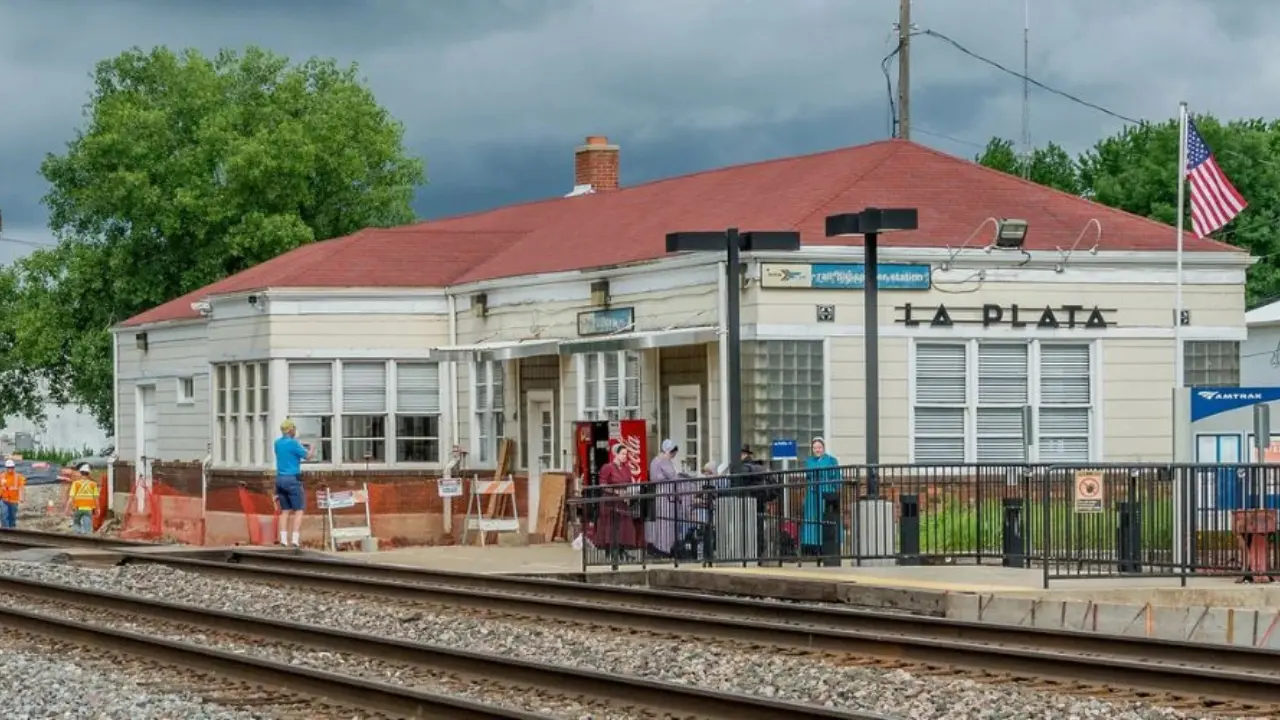
The La Plata Amtrak Station serves as a small but significant rail stop in northern Missouri, offering essential connectivity for residents and travelers passing through the region. Located in the town of La Plata, this station sits along a major east–west rail corridor, making it an important link between rural communities and larger metropolitan areas. While modest in size, its role reflects the broader history of passenger rail in the United States—balancing legacy infrastructure with modern transportation needs.
The station is part of a network that prioritizes accessibility over scale. Unlike large urban terminals, it operates with fewer amenities, but its simplicity allows it to function efficiently for the volume of passengers it serves. This design reflects the realities of smaller towns, where demand does not justify expansive facilities but still requires reliable service.
History of La Plata Amtrak Station
The origins of the La Plata Amtrak Station are closely tied to the expansion of railroads in the Midwest during the late 19th and early 20th centuries. Rail lines were initially developed to support agriculture and commerce, connecting rural producers to urban markets. Passenger service naturally followed, turning towns like La Plata into stopping points along longer routes.
When Amtrak was established in 1971 to consolidate passenger rail services, many smaller stations were either closed or restructured. La Plata retained its stop because of its strategic location along an active route. The continued operation of the station demonstrates how transportation planning often balances cost efficiency with geographic necessity. Eliminating such stops would reduce access for entire communities, which is why they persist despite lower ridership compared to urban hubs.
La Plata Amtrak Station Contact Details
The La Plata Amtrak Station is situated in a central but quiet area of the town, making it easy to reach by car or on foot. Its placement reflects traditional rail planning, where stations were built near town centers to maximize accessibility before widespread automobile use.
Accessibility features are designed to meet basic requirements:
- Ground-level boarding areas for easier train access
- Parking spaces for short-term and long-term use
- Simple waiting areas for passengers
These features exist because smaller stations must balance compliance with cost. Investing in large-scale infrastructure, such as multi-level platforms or extensive indoor facilities, would not be practical given the station’s passenger volume.
| Station: | La Plata Station |
| Station Code: | LAP |
| Contact Number: | +1 800-872-7245 |
| Email: | etickets@amtrak.com |
| Lost and Found: | +1 800-872-7245 / +1 833-391-0338 |
| Police: | +1-800-331-0008 |
| Working Hours: | 06:30 A.M. to 10:00 P.M |
| Nearby Airport: | Kirksville Municipal Airport (IRK) |
| Website: | https://www.amtrak.com/ |
| Instagram: | https://www.instagram.com/amtrak |
| X (Twitter): | https://x.com/amtrak |
| Youtube: | https://www.youtube.com/amtrak |
| Facebook: | https://www.facebook.com/Amtrak/ |
| Pinterest: | https://www.pinterest.com/amtraktravels/ |
La Plata Amtrak Station Layout Map
With the help of a map of LAP Station, Amtrak passengers can navigate it easily. It shows the precise location of the main platform, entrances, exits, etc. Also, it helps them find their way inside the station.
List of all Amtrak Stations.
Routes and Services
The LAP Amtrak Station is served by a long-distance route that connects major cities across several states. This route provides essential mobility for those traveling between the Midwest and other regions of the country.
Key service characteristics include:
- Daily train service in both directions
- Connections to larger transportation hubs
- Coach and sleeper accommodations on passing trains
The reason service remains limited to one primary route is rooted in demand and logistics. Rail operators prioritize efficiency, and adding more routes would require sufficient passenger numbers to justify scheduling, staffing, and maintenance costs.
Station Facilities and Amenities
The LAP Amtrak Station offers a minimal set of amenities compared to larger stations, but these are aligned with traveler needs in a small-town setting. Passengers can expect:
- A sheltered waiting area
- Basic seating arrangements
- Ticketing services (often automated or limited hours)
This simplicity is intentional. Maintaining extensive facilities requires staffing and operational expenses that would not be sustainable given the station’s usage. Instead, the focus remains on reliability and functionality.
Importance to the Local Community
The LAP Amtrak Station plays a meaningful role in the daily life of the town and surrounding areas. For residents without easy access to major airports or highways, the station provides a crucial transportation alternative.
Its importance can be understood through several factors:
- Economic connectivity: It links local businesses and residents to larger markets
- Mobility for non-drivers: Elderly individuals and students often rely on rail travel
- Tourism access: Visitors can reach the region without needing a car
The station exists not because it generates high revenue, but because it fulfills a public service function. Transportation infrastructure in rural areas often prioritizes accessibility over profitability.
Why the Station Remains Small
One of the most notable aspects of the LAP Amtrak Station is its modest scale. This is not due to neglect, but rather a reflection of strategic planning decisions.
Several reasons explain its size:
- Population density: Smaller towns generate fewer (passengers)
- Cost management: Large facilities would increase maintenance expenses
- Operational efficiency: Simpler layouts reduce staffing needs
Rail systems are designed to allocate resources where they are most needed. Large cities receive extensive infrastructure because they serve high volumes, while smaller locations maintain streamlined operations.
Travel Experience at LAP Amtrak Station
Traveling through the La Plata Amtrak Station offers a straightforward and calm experience. Unlike busy urban terminals, passengers encounter minimal crowds and shorter waiting times.
Typical travel steps include:
- Arriving shortly before departure
- Waiting in designated seating areas
- Boarding directly from ground-level platforms
This process is efficient because it eliminates the complexities found in larger stations, such as multiple gates or security checkpoints. The simplicity benefits travelers who prefer a more relaxed journey.
Challenges and Future Considerations
Despite its usefulness, the LAP Amtrak Station faces challenges common to rural transportation infrastructure. These include limited funding, fluctuating ridership, and evolving travel preferences.
Future considerations may involve:
- Upgrading accessibility features
- Improving digital ticketing systems
- Enhancing connectivity with other transport modes
Such changes depend on funding priorities and regional planning. Investments are typically made when they can significantly improve service without disproportionate cost.
The La Plata Amtrak Station exemplifies how small-town rail stops continue to serve an essential role in modern transportation networks. While it lacks the scale and amenities of major terminals, it provides reliable, accessible service tailored to the needs of its community.
FAQs
It is located in La Plata, Missouri, within the town’s central area for easy local access.
The station is served by a long-distance Amtrak route connecting multiple major cities.
No, it provides basic facilities like seating and shelter, reflecting its smaller size.
It offers essential travel access for residents who may not have other transportation options.
Staffing is limited, and many services are automated or available during specific hours only.