
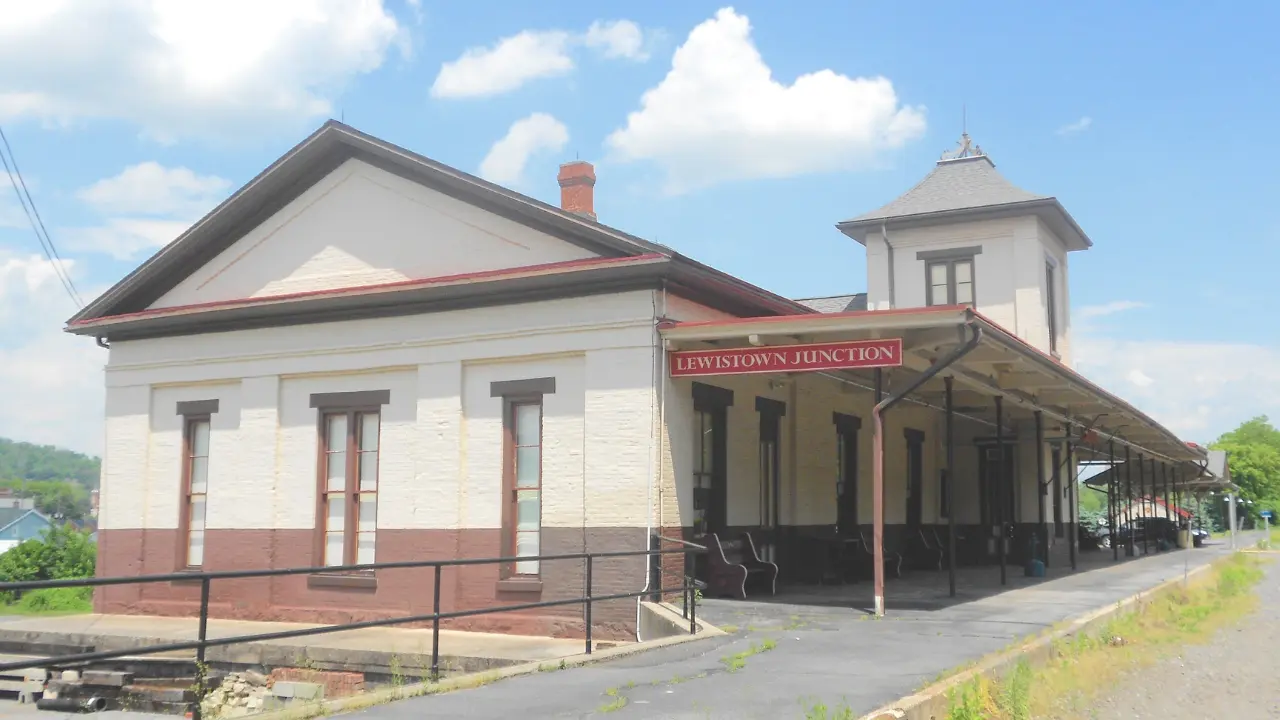
The rail stop commonly known as Lewistown Amtrak Station serves the borough of Lewistown in central Pennsylvania and operates as a small but important stop on the broader intercity rail network managed by Amtrak. Unlike large urban terminals, this station is designed primarily as a basic boarding point rather than a full-service transportation hub.
Location and Accessibility at Lewistown Amtrak Station
The Lewistown Amtrak Station is located at:
150 Helen Street, Lewistown, PA 17044, United States
This location places it near downtown Lewistown, within reach of residential neighborhoods and local road connections. The station is not part of a large transit center, so access is mainly via personal vehicles, walking from nearby areas, or local taxi services.
Public transportation options in the immediate area are limited, which is typical for smaller Pennsylvania rail stops. Parking availability is usually basic and may consist of small, unreserved spaces rather than structured parking facilities.
| Station: | Lewistown Station |
| Station Code: | LEW |
| Contact Number: | 1-800-872-7245 |
| Email: | etickets@amtrak.com |
| Lost and Found: | Online Form |
| Police: | +1-800-331-0008 |
| Working Hours: | Monday to Sunday from 09:30 AM to 06:30 PM |
| Nearby Airport: | Lewistown Municipal Airport (LWT) |
| Website: | https://www.amtrak.com/home |
| YouTube: | https://www.youtube.com/amtrak |
| Facebook: | https://www.facebook.com/Amtrak/ |
| Instagram: | https://www.instagram.com/amtrak |
| X (Twitter): | https://www.twitter.com/amtrak |
| LinkedIn: | https://www.linkedin.com/company/amtrak |
| Pinterest: | https://www.pinterest.com/amtraktravels/ |
LEW Amtrak Station Layout Map
Further, this is a detail-oriented visual representation of Amtrak’s Lewistown Station. With the help of this map, passengers can have a hassle-free navigation experience. The entry and exit points of Amtrak can also be figured out conveniently.
Train Routes and Services
Service at Lewistown Amtrak Station is part of regional intercity rail routes rather than long-distance express-only stops. Most trains passing through are scheduled passenger services running along the Keystone and Pennsylvanian corridors.
Typical travel connections include:
- Eastbound service toward Harrisburg and Philadelphia connections
- Westbound service toward Altoona and Pittsburgh
- Linkages to broader national routes through transfer stations
Because this station is not a major hub, not all trains stop here. Schedules are structured based on demand, population density, and operational efficiency. For example, some long-distance services may pass through without stopping if passenger volume projections do not justify a halt.
This selective stopping pattern explains why Lewistown Amtrak Station may have fewer daily departures compared to larger stations. Travelers are encouraged to check schedules in advance since service frequency can vary by weekday, season, and operational updates from Amtrak.
Facilities and Amenities at Lewistown Amtrak Station
Facilities at Lewistown Amtrak Station are minimal but sufficient for short waiting periods. It is primarily a platform-based station rather than a full indoor terminal.
Common features include:
- A basic passenger platform for boarding and alighting
- Limited or no enclosed waiting hall
- Minimal seating arrangements
- Signage indicating train directions and safety instructions
- Lighting for early morning or evening trains
Unlike major city stations, there are no full-service amenities such as restaurants, retail shops, or staffed ticket counters. Ticketing is typically handled online or via mobile applications before arrival.
The simplicity of LEW Amtrak Station reflects a broader operational approach used in smaller towns, where infrastructure is kept lean to match passenger volume while still maintaining essential connectivity.
Historical Background and Rail Development
Rail service in the Lewistown area has deep historical roots tied to Pennsylvania’s industrial and transportation development. The rail corridor passing through Lewistown has long been part of the mainline routes connecting eastern and western Pennsylvania.
Over time, station facilities were simplified as rail operations modernized and passenger patterns changed. Instead of maintaining large staffed depots, many smaller stations transitioned into unstaffed platform stops.
This evolution explains the current structure of LEW Amtrak Station, which reflects a shift from traditional rail travel hubs to efficient stop-based service points designed for modern intercity rail operations.
Passenger Experience at LEW Amtrak Station
Travelers using Lewistown Amtrak Station should expect a quiet, low-traffic environment. The station rarely experiences crowding, which can be beneficial for those seeking a straightforward boarding process.
However, the limited infrastructure means passengers should plan ahead:
- Arrive early, as there may be no indoor waiting area
- Prepare for weather exposure while waiting on the platform
- Have tickets ready digitally or printed in advance
- Monitor train updates closely, as delays can occur due to shared track usage
Despite its simplicity, the station provides reliable access to regional rail travel, especially for residents who depend on it for commuting or intercity trips.
Why Services Are Structured This Way
The operational model at Lewistown Amtrak Station is shaped by demand, geography, and rail network efficiency. Smaller communities typically generate fewer daily passengers compared to urban centers, which influences scheduling decisions.
There are several key reasons for limited service:
- Shared rail lines with freight traffic reduce available passenger slots
- Lower population density in the surrounding region
- Cost-efficiency considerations for stopping long-distance trains
- Strategic prioritization of major hubs for faster travel times
This system allows Amtrak to maintain national connectivity while balancing operational costs and travel speed.
Travel Tips for Visitors
Travelers using Lewistown Amtrak Station can improve their experience by planning carefully:
- Always verify train schedules on the day of travel
- Use mobile ticketing to avoid last-minute issues
- Bring weather protection due to limited shelter
- Arrange transportation in advance for arrival or departure
- Keep buffer time for potential delays on shared rail corridors
Because the station is simple and unstaffed, self-preparation is key to a smooth journey.
Regional Importance of the Station
Despite its modest size, LEW Amtrak Station plays an important role in connecting central Pennsylvania to larger economic and travel networks. It provides access for residents who may not live near major transit hubs.
The station supports:
- Commuter mobility between smaller towns and cities
- Regional tourism access to central Pennsylvania
- Connectivity for students, workers, and long-distance travelers
For the community of Lewistown, the station remains a valuable transportation link that reduces geographic isolation and supports mobility.
Future Outlook for Lewistown Amtrak Station
The future of Lewistown Amtrak Station is closely tied to broader rail infrastructure planning and passenger demand trends. While major expansions are unlikely in the short term, incremental improvements such as schedule optimization or platform upgrades may occur over time.
As intercity rail interest grows in the United States, smaller stations like this one may see gradual enhancements in reliability and passenger information systems. However, the core structure of the station is expected to remain simple due to its operational role.
FAQs
It is located at 150 Helen Street, Lewistown, PA 17044, United States, near downtown Lewistown in central Pennsylvania.
Primarily regional Amtrak services operating between Harrisburg, Pittsburgh, and connecting routes across Pennsylvania.
No, the station has very limited facilities and generally only provides a platform and basic seating.
Arriving 20–30 minutes early is usually sufficient due to the station’s small size and quick boarding process.
Service is limited due to lower passenger demand, shared rail traffic with freight trains, and operational efficiency requirements.