
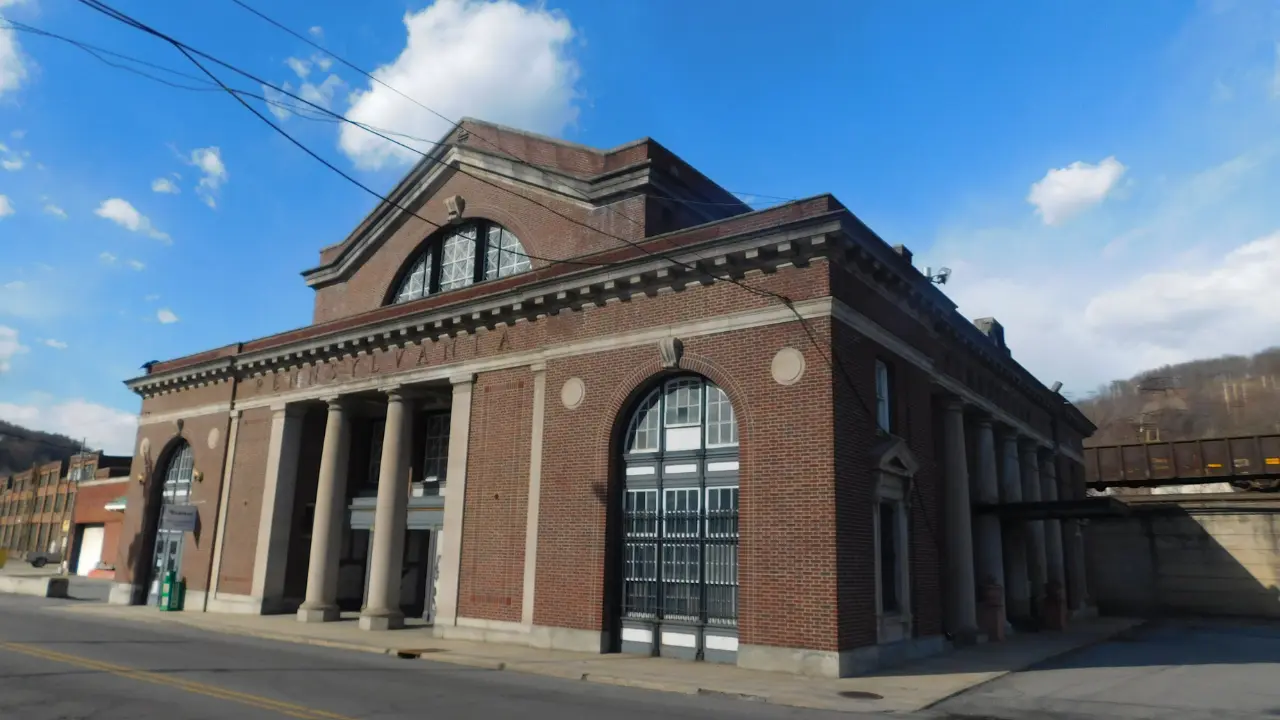
The Johnstown Amtrak Station serves as a regional rail stop located in Johnstown. It operates under the national passenger rail network managed by Amtrak and functions as part of the Pennsylvanian route corridor. The station remains a small-scale facility, yet it plays a practical role in connecting western Pennsylvania with major interstate destinations.
Johnstown Amtrak Station Location and Urban Context
The Johnstown Amtrak Station is positioned in the downtown district of Johnstown, which allows direct integration with the city’s core activity zone. Urban placement reduces transfer distance between rail and local transport systems. As a result, passenger movement between city services and rail access remains straightforward.
In addition, proximity to commercial streets and civic buildings supports basic travel needs without requiring extended transit. This layout reflects typical mid-sized American rail planning, where stations were historically placed near industrial and business centers.
| Station: | Johnstown Station |
| Station Code: | JST |
| Contact Number: | +1 800-872-7245 |
| Email: | etickets@amtrak.com |
| Lost and Found: | +1 800-872-7245 / +1 833-391-0338 |
| Police: | +1-800-331-0008 |
| Working Hours: | 06:30 A.M. to 10:00 P.M |
| Nearby Airport: | Johnstown–Cambria County Airport (JST) |
| Website: | https://www.amtrak.com/ |
| Instagram: | https://www.instagram.com/amtrak |
| X (Twitter): | https://x.com/amtrak |
| Youtube: | https://www.youtube.com/amtrak |
| Facebook: | https://www.facebook.com/Amtrak/ |
| Pinterest: | https://www.pinterest.com/amtraktravels/ |
Johnstown Station Layout Map
With the help of a map of JST Station, Amtrak passengers can navigate it easily. It shows the precise location of the main platform, entrances, exits, etc. Also, it helps them find their way inside the station.
List of all Amtrak Stations.
Johnstown Station and Historical Rail Significance
The Johnstown Amtrak Station is tied closely to the industrial growth of Johnstown. Rail infrastructure expanded alongside steel production and manufacturing activities in the region. Freight movement dominated early operations, and passenger services later developed as secondary but essential functions.
Over time, rail importance shifted from industrial logistics toward public transportation. Even after industrial decline, the station retained its role as a connection point within the broader corridor. This continuity explains why the station still exists despite reduced regional rail density.
Rail Services and Route Network
The Johnstown Amtrak Station is served by the Amtrak Pennsylvanian line, which operates between key cities in Pennsylvania and neighboring states.
Core route coverage includes:
- Westbound movement toward Pittsburgh
- Eastbound service through Harrisburg, Philadelphia, and onward to New York City
This route structure supports both intercity travel and regional connectivity. Scenic terrain along the Allegheny region adds geographical variation, which is a byproduct of rail alignment through mountainous zones rather than a designed tourism feature.
Facilities and Operational Setup
The Johnstown Station operates with limited infrastructure compared to major terminals. A basic waiting area is provided, and ticket access is primarily handled through digital systems under Amtrak.
Parking facilities exist in nearby zones, and pedestrian access remains the primary mode of entry. Accessibility features are present to support mobility requirements, although service scope remains minimal due to station size.
Operational design follows a low-volume model, where staffing and services are reduced in alignment with passenger demand levels.
Nearby Urban and Cultural Points
The Johnstown Amtrak Station sits close to several historically and culturally significant locations within the city:
- Johnstown Inclined Plane, a steep incline railway engineered for hillside transport
- Johnstown Flood Museum, which documents the 1889 flood and its socioeconomic impact
- Central downtown areas where retail and small businesses remain concentrated
These locations developed around the same urban core that supported early rail infrastructure. As a result, spatial proximity between transport and cultural sites remains a structural feature of the city.
Travel Behavior and Usage Pattern
The Johnstown Station typically handles low to moderate passenger volume. Service frequency is limited to scheduled intercity trains, which influences travel planning patterns. As a result, rail usage often aligns with planned trips rather than spontaneous commuting.
Advance booking is commonly required due to once-daily train frequency on the Pennsylvanian route. This scheduling model reflects broader Amtrak corridor operations where smaller stations function as intermediate stops rather than primary hubs.
Strategic Role in Regional Transport
The Johnstown Station contributes to regional mobility by linking a smaller urban center with larger metropolitan nodes. Its role becomes clearer within the context of Pennsylvania’s rail geography, where not all cities maintain high-frequency rail service.
Connectivity to Amtrak ensures that Johnstown remains part of national rail circulation despite limited local transit expansion. This integration supports economic and social access between regions without relying exclusively on road transport.
The Johnstown Amtrak Station functions as a compact but structurally important rail stop in Johnstown. Its placement within the Pennsylvanian route under Amtrak maintains essential east–west connectivity across Pennsylvania.
Operational simplicity, limited facilities, and historical continuity define its character. Despite reduced scale compared to major terminals, the station continues to support regional mobility and preserves its relevance within the broader intercity rail framework.
FAQs
The Johnstown Station serves as a regional stop for intercity passenger trains. It connects Johnstown with major cities through the Amtrak Pennsylvanian route.
The station is served by the Amtrak Pennsylvanian line. It provides eastbound and westbound connectivity across Pennsylvania and beyond.
Typically, one train operates in each direction per day. This schedule is due to its role as a smaller regional stop on a long-distance route.
Basic facilities include a waiting area and nearby parking options. Most ticketing and scheduling services are handled online through Amtrak.
Key attractions include Johnstown Inclined Plane and Johnstown Flood Museum. Both are within short distance from the station area.