
The Amtrak Albany to Boston route forms part of the wider Northeast rail network, but it does not operate as a single direct train. A connection is required, most commonly through New York City or Springfield. This structure exists because rail lines in the Northeast Corridor were developed as interconnected segments rather than a single continuous intercity service.

As a result, the journey combines multiple Amtrak services while still maintaining a continuous rail connection between upstate New York and Massachusetts.
Route Overview – Amtrak Albany to Boston
The Albany to Boston Amtrak route typically follows two established corridors:
Primary routing (via New York City)
- Albany → New York City → Boston
- Empire Service + Northeast Regional
Secondary routing (via Springfield)
- Albany → Springfield → Boston
- Empire Service + connecting regional services
This division occurs because Albany sits on the Empire Corridor, while Boston lies on the Northeast Corridor. The connection between both systems is handled through interchange hubs rather than a direct rail link.
Amtrak Albany to Boston Route Summary
| Feature | Details |
|---|---|
| Service Type | Multi-segment intercity rail |
| Operators | Amtrak |
| Departure Hub | Albany–Rensselaer Station |
| Arrival Hub | South Station |
| Total Duration | 6 to 9 hours |
| Distance | ~200–250 miles |
| Route Type | Connected regional corridors |
Why a Direct Train Does Not Operate
A single-seat Albany to Boston train does not exist due to historical rail alignment. The Empire Corridor and Northeast Corridor developed independently, and infrastructure between Albany and Boston was never designed for continuous through-service.
Therefore, passenger movement depends on timed transfers, which allows higher network flexibility but introduces variability in total travel time.
Albany–Rensselaer Station (Departure Point)
Amtrak Albany–Rensselaer Station serves as the primary rail gateway for New York’s Capital Region.
The station sits across the Hudson River from downtown Albany. Its placement reflects a common pattern in U.S. rail design, where major stations were positioned outside dense urban cores due to historical land and infrastructure constraints.
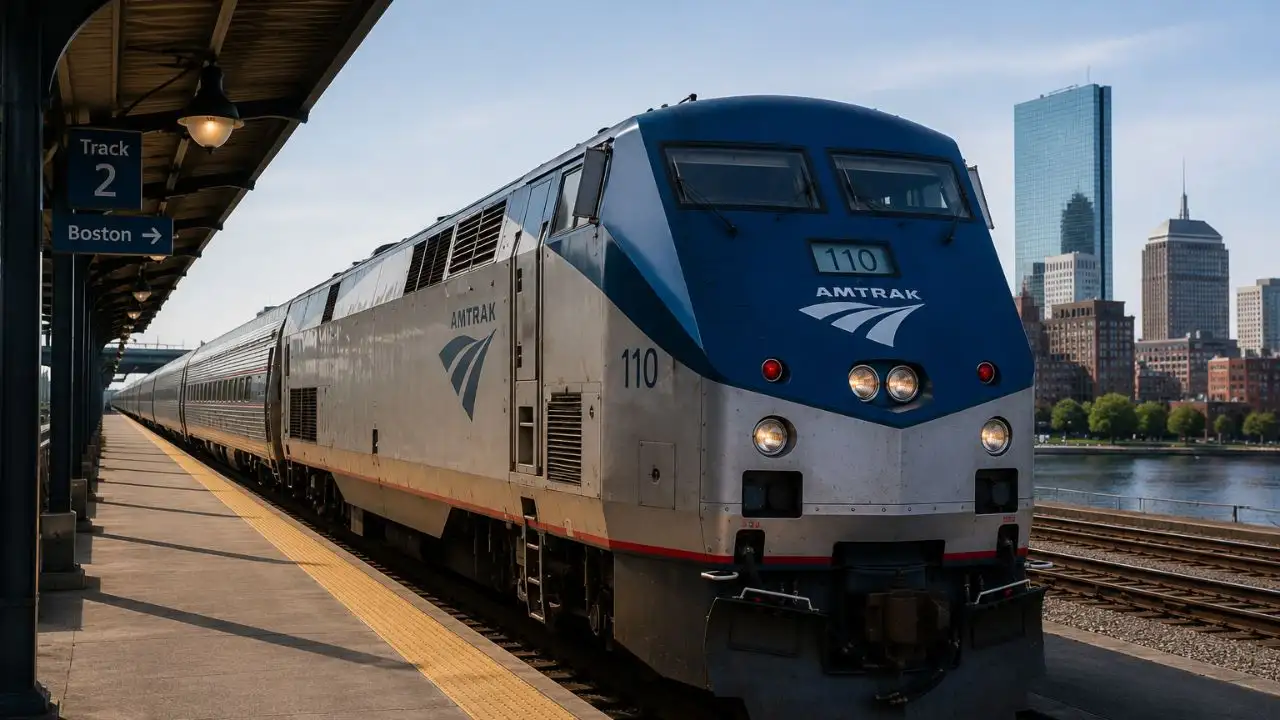
Station functions
- Long-distance Amtrak departures
- Regional Empire Corridor services
- Park-and-ride commuter access
- Bus and taxi interchanges
Parking capacity and highway proximity support suburban and regional access more than walk-in urban traffic.
South Station Boston (Arrival Point)
Amtrak South Station functions as the main intermodal hub in Boston.
Rail, subway, and bus systems converge at this location, which explains its role as the final endpoint for Amtrak services arriving from New York, Albany connections, and other Northeast cities.
Operational role
- Northeast Corridor terminal
- MBTA commuter rail hub
- Urban transit interchange point
High passenger volume concentrates services in a single terminal, which reduces transfer friction across Boston’s rail network.
Amtrak Albany to Boston Schedule Structure
The Amtrak Albany to Boston schedule depends on two independently timed services. Coordination between them determines total journey time.
Typical timing chain
- Albany → New York City: ~2.5–3.5 hours
- Transfer window: ~30–120 minutes
- New York City → Boston: ~3.5–4 hours
Total travel time generally remains within 6 to 9 hours.
Delays often accumulate near New York Penn Station because multiple long-distance and commuter rail systems share limited track capacity. This congestion affects downstream connections.
Ticket Pricing Pattern
Pricing follows a demand-based model across both segments.
| Segment | Typical Range |
|---|---|
| Albany → NYC | $30–$90 |
| NYC → Boston | $35–$120 |
| Total Journey | $65–$200+ |
Fares increase when demand clusters around weekends, holidays, and academic travel periods. Lower pricing appears when bookings are made earlier, reflecting Amtrak’s dynamic pricing structure.
Onboard Experience
Service quality varies between train segments, although both fall under the same national operator, Amtrak.
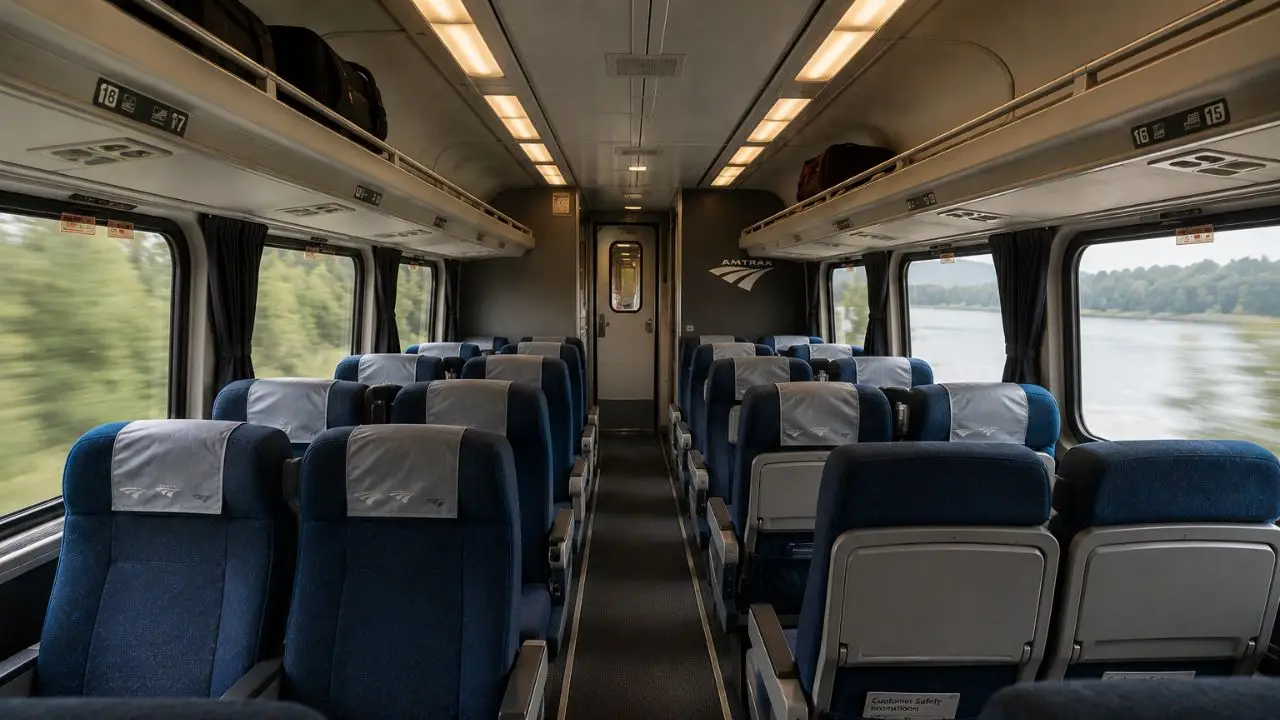
Common features
- Reserved seating with reclining layout
- Power access at most seats
- Restrooms in each car
- Overhead storage space
Segment variation
Empire Service trains focus on regional travel efficiency, while Northeast Regional trains emphasize higher frequency and broader onboard services.
Café services operate on selected trains depending on equipment assignment.
Scenic and Geographic Profile
The route passes through two distinct rail environments.
Hudson River Valley segment
Terrain follows the river corridor, where rail lines were historically built alongside water routes to reduce elevation challenges. Towns and industrial heritage sites line the riverbanks, creating continuous landscape variation.
New England corridor segment
Between New York City and Boston, the line transitions into coastal plains and river systems. Gradual urban density increase appears as Boston approaches, reflecting long-term settlement patterns along the Northeast coastline.
Seasonal Travel Behaviour
Seasonality influences both reliability and visual experience.
- Spring: river flow increases, vegetation returns across Hudson Valley
- Summer: stable operations, higher passenger volume
- Autumn: foliage conditions peak across New York and New England
- Winter: slower operations due to snow and reduced track speeds
Operational adjustments during winter prioritize safety over scheduling precision.
Transportation and Access
Albany–Rensselaer Station
- Structured primarily for regional car access
- Parking infrastructure supports long-duration travel
- Highway connectivity reduces urban congestion dependence
South Station Boston
- Integrated with MBTA subway system
- Walkable access to central business districts
- High-density transit interchange model
The contrast between both stations reflects differing urban transport strategies between Albany and Boston.
The Amtrak Albany to Boston route operates as a linked corridor rather than a direct rail service. This structure results from historical separation between the Empire and Northeast rail systems. Although transfers are required, coordinated scheduling maintains consistent connectivity between the two cities.
Frequently Asked Questions
No direct train operates. Travel requires a connection, usually via New York City or Springfield.
The journey combines two Amtrak segments: Albany to NYC and NYC to Boston.
Both segments are linked through scheduled transfers.
Total travel time is usually 6 to 9 hours. Duration depends on transfer time and rail congestion near New York City.
Albany → New York City → Boston is the fastest and most frequent option. It reduces waiting time between connecting trains.
Albany–Rensselaer Station and South Station are the main departure and arrival hubs.
Both stations connect to regional transport systems.
Typical fares range from $65 to $200+ depending on demand and timing. Prices rise during weekends, holidays, and peak travel seasons.